Things to Do Near the Ranch
Within an hour of Cosumnes River Ranch in Plymouth, California: the Shenandoah Valley’s fifty-odd wineries, the Gold Rush towns along Highway 49, a crystal cavern, the Chaw’se grinding rock, guided whitewater on the neighboring rivers, and two good dinners. Drive times are from Plymouth, the town at our gate.
Wine country
More than fifty family wineries start about two miles up Shenandoah Road — old-vine Zinfandel and Barbera — and the ranch's own grapes grow up the road at La Mesa Vineyards.
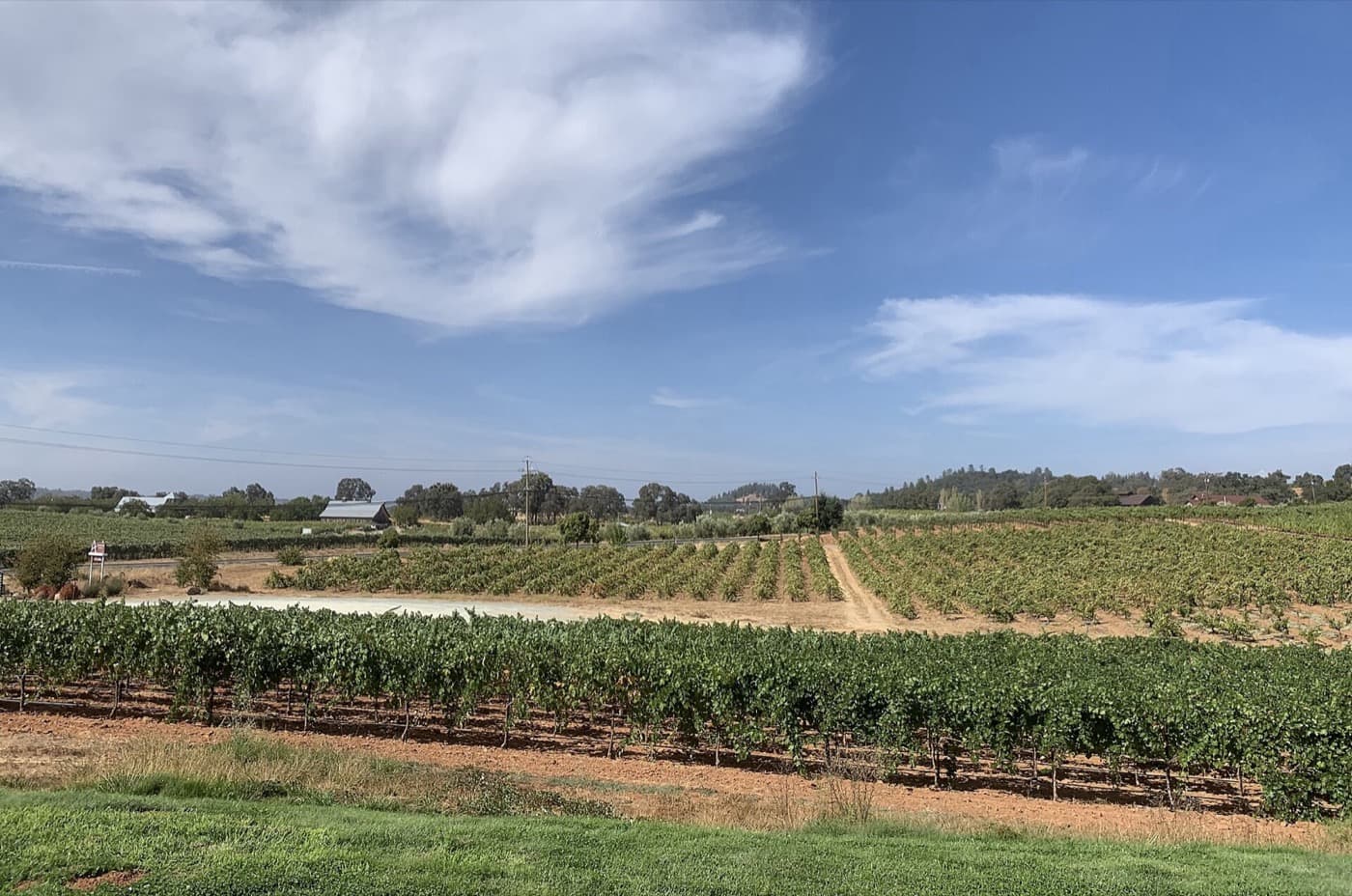
Photo: Pf1127 · CC BY-SA 4.0 · Wikimedia Commons Shenandoah Valley wineries
More than fifty family-owned wineries in the Sierra Foothills AVA start about two miles up Shenandoah Road — old-vine Zinfandel and Barbera, low tasting fees, unfussy patios with a view.
Most tasting rooms pour roughly 11am–5pm; some close midweek. The Amador Vintners map is the easiest way to plan a loop.
La Mesa Vineyards
Where the ranch's own grapes are grown: a high-elevation estate on Shenandoah Road with a modern tasting room, a terrace over the vines, and Rhône and Italian varietals you will not find in most of California. A weekend bistro pairs them with lunch.
Tasting room Thursday–Sunday; closed Monday–Wednesday. A second tasting room sits on Main Street in Sutter Creek.
Amador Flower Farm
Demonstration gardens in the middle of the valley with more than a thousand daylily varieties, a nursery and a gift shop — free to walk, and a good pause between tasting rooms.
Daily March–November, Thursday–Sunday in winter. Daylilies peak late spring to mid-July; pumpkins in the fall.
Gold Country towns
Highway 49 strings the Gold Rush towns together: Sutter Creek's balconied nineteenth-century Main Street, and in Volcano a general store trading since 1852.
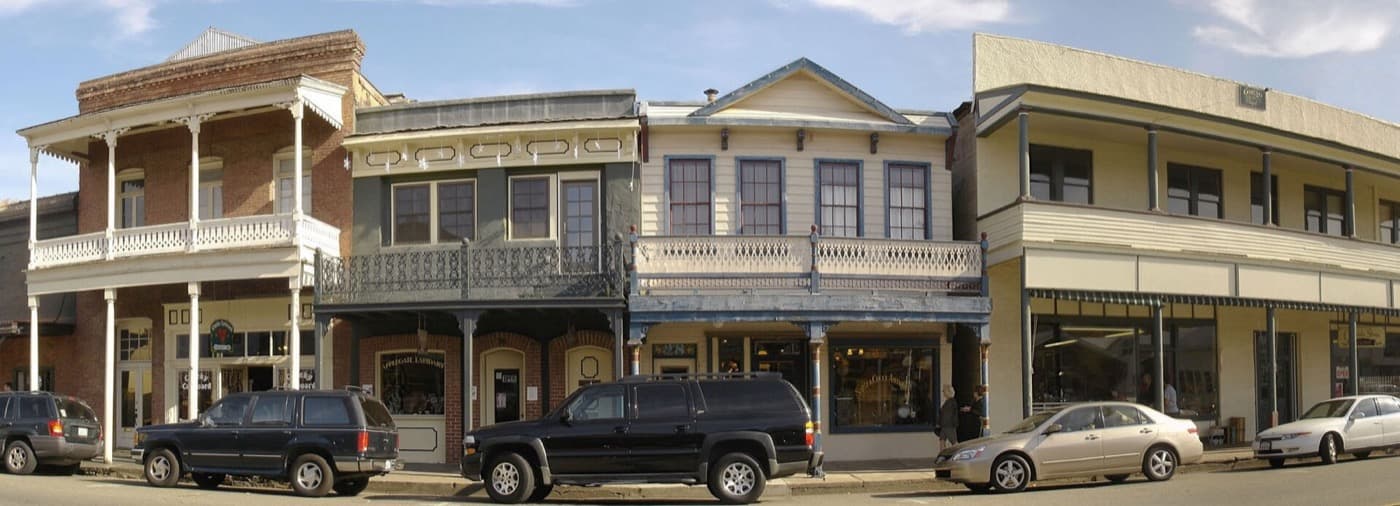
Photo: Flickr user MiguelVieira · CC BY 2.0 · Wikimedia Commons Sutter Creek's Main Street
The town calls itself the jewel of the Mother Lode, and the walk earns it: a stretch of Old Highway 49 lined with balconied nineteenth-century buildings holding galleries, antiques, boutiques and tasting rooms.
Shops keep daytime hours and most close around 5pm — go for a late morning and lunch.
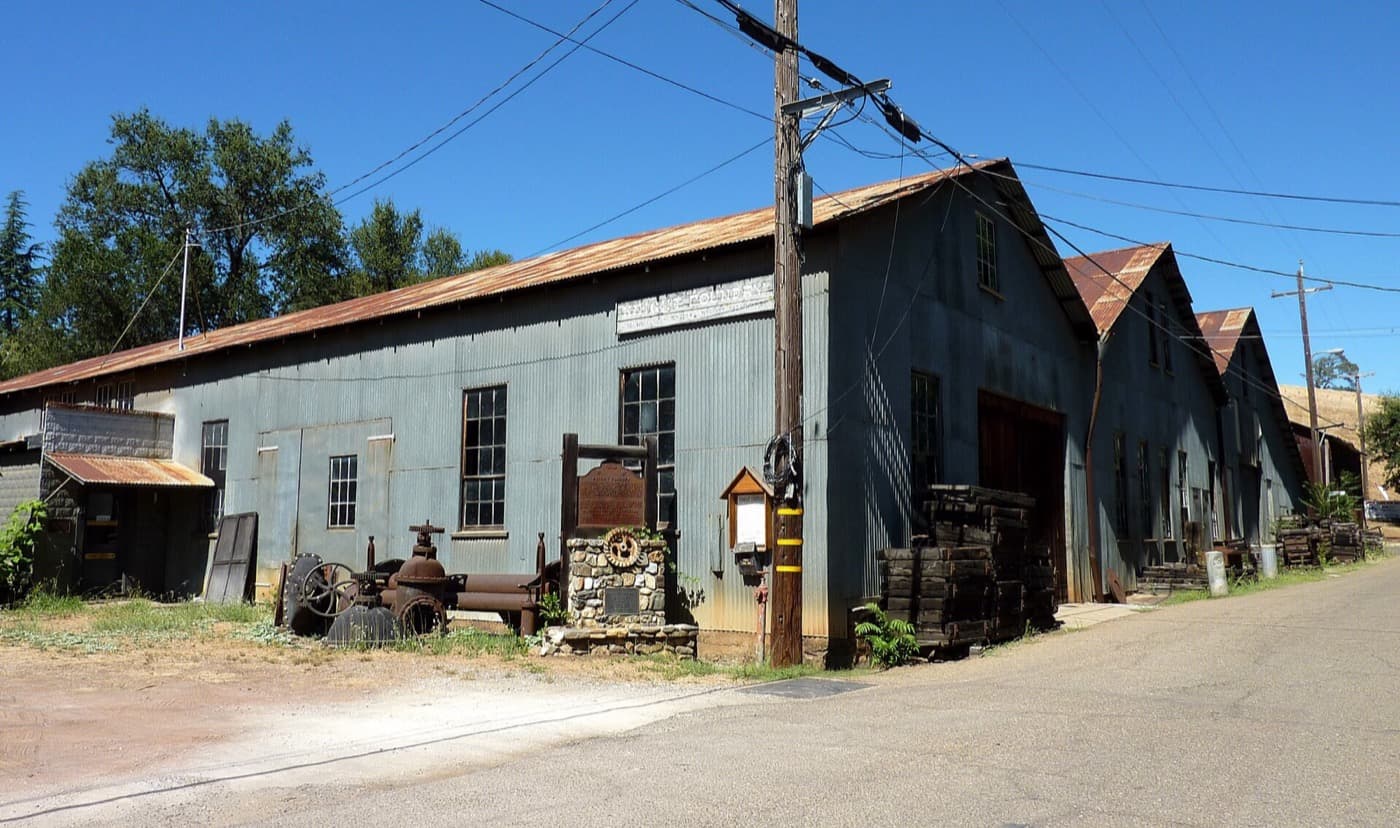
Photo: Bobak Ha'Eri · CC BY 3.0 · Wikimedia Commons Knight Foundry
America's last water-powered foundry and machine shop, running since 1873 with its Gold Rush-era equipment still in place. On demo days the forge is lit and they pour sand castings.
Open the second and fourth Saturdays; the second Saturday is the live-demo day. Check dates before you go.
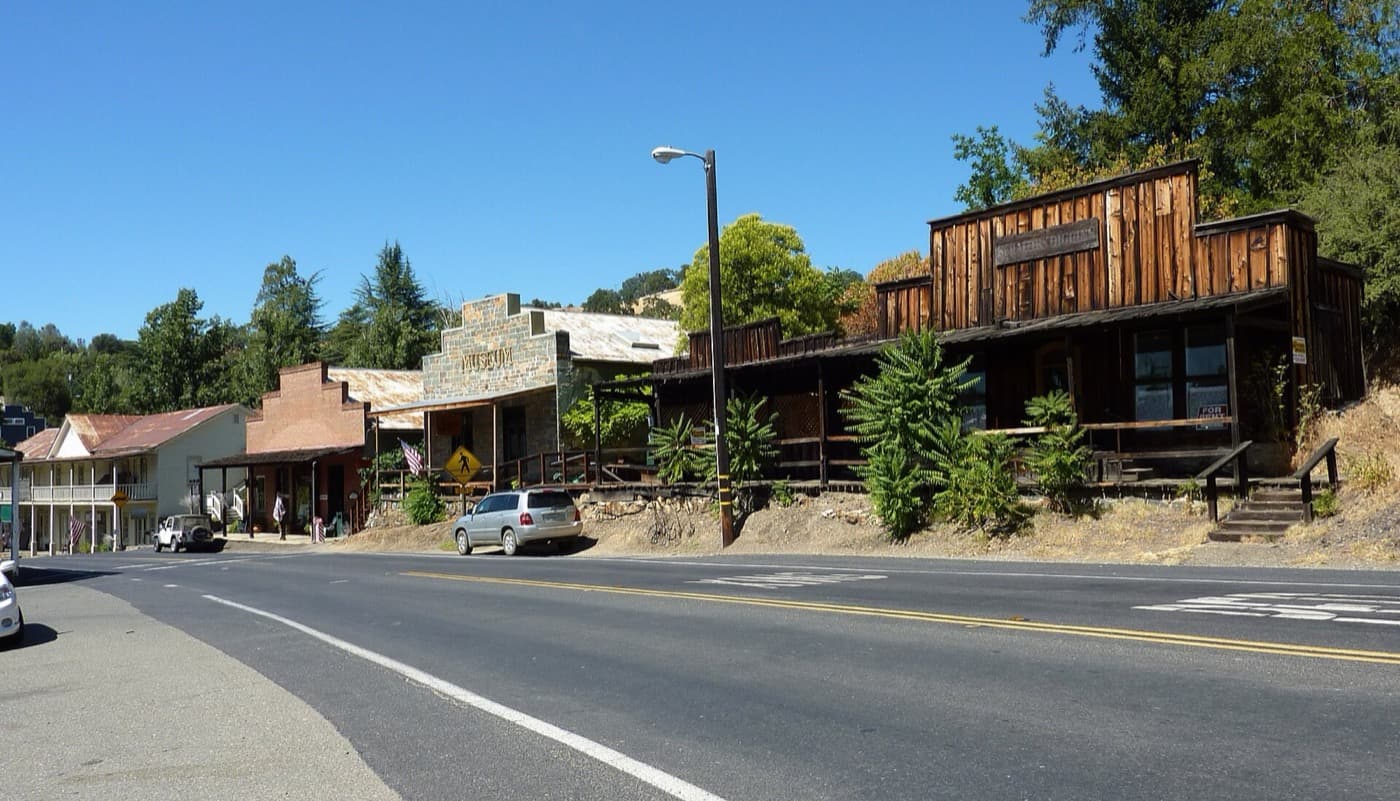
Photo: Bobak Ha'Eri · CC BY 3.0 · Wikimedia Commons Amador City
California's smallest incorporated city — one Gold Rush block of antique and artisan shops — with the little Whitney Museum on the women of the Mother Lode.
The museum keeps weekend afternoon hours; the street is a twenty-minute stroll any day.
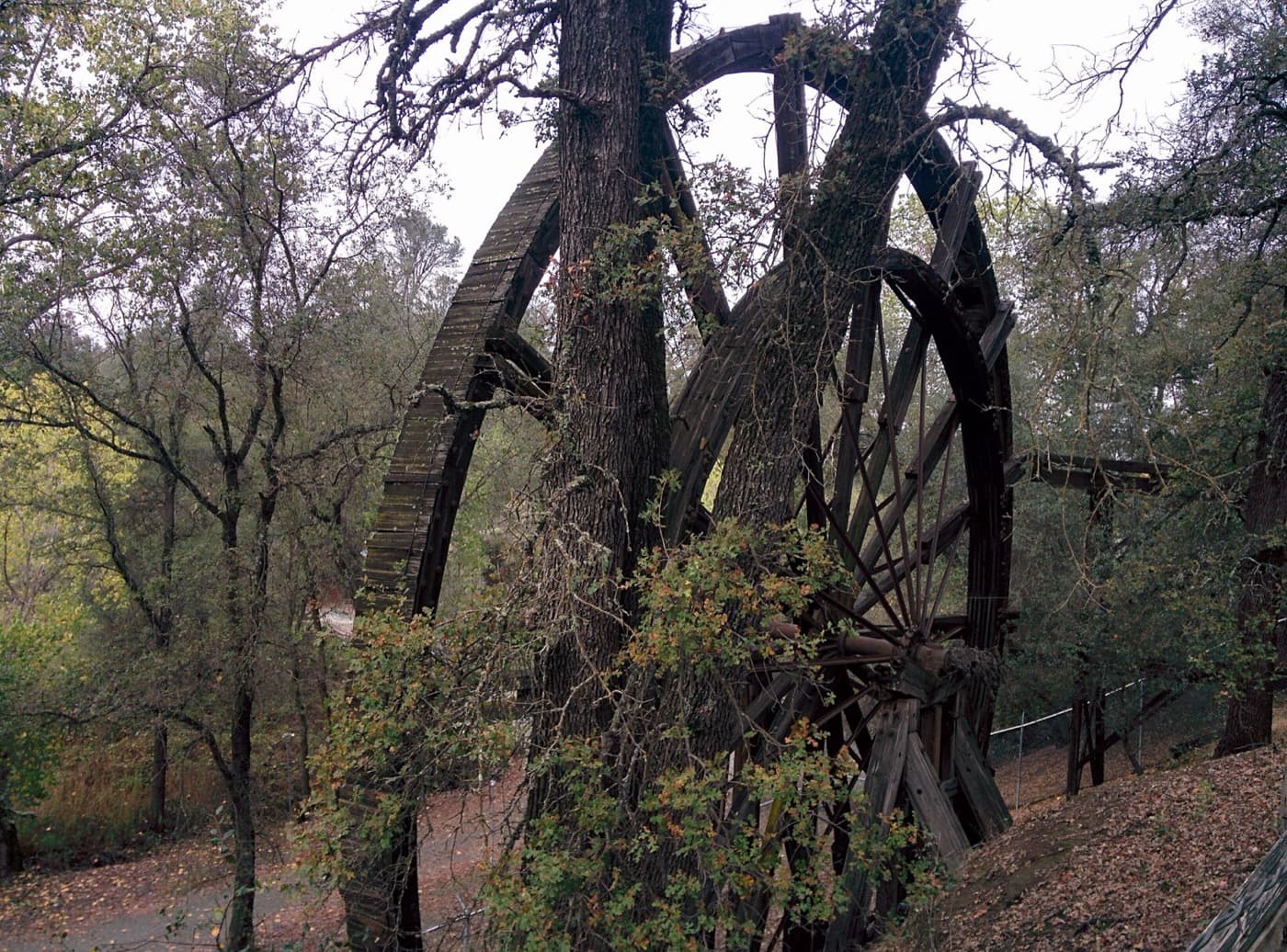
Photo: Claudev8 · CC BY-SA 4.0 · Wikimedia Commons Kennedy Gold Mine
A guided surface tour of what was, when it closed in 1942, one of the deepest gold mines in North America — headframe, stamp-mill remains, the mine office, and gold panning for the kids.
Weekend and holiday tours March–October; one Saturday a month in winter. Picnic lunches welcome.
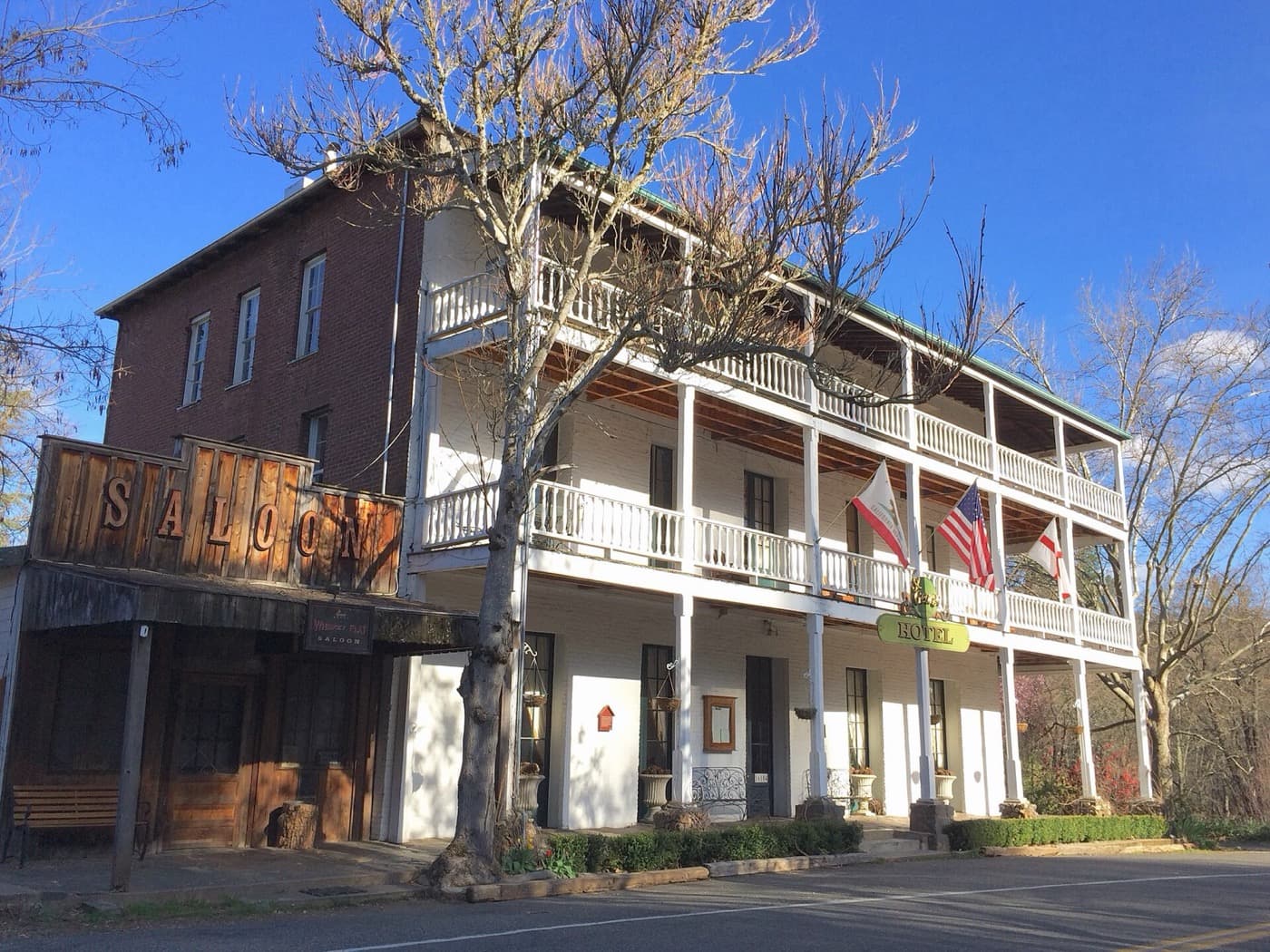
Photo: Sharon Hahn Darlin · CC BY 2.0 · Wikimedia Commons Volcano
A pocket-sized 1848 mining town: the Civil War cannon 'Old Abe', the 1856 Cobblestone Theatre, and a general store trading continuously since 1852. Pair it with the cavern and the grinding rock on the same road.
Fiddletown & the Chew Kee Store
An 1849 village that is a historic district end to end, centered on the rammed-earth Chew Kee Chinese apothecary from the 1850s, kept as a museum by the town's preservation society.
The museum opens Saturday afternoons April–October, or by appointment.
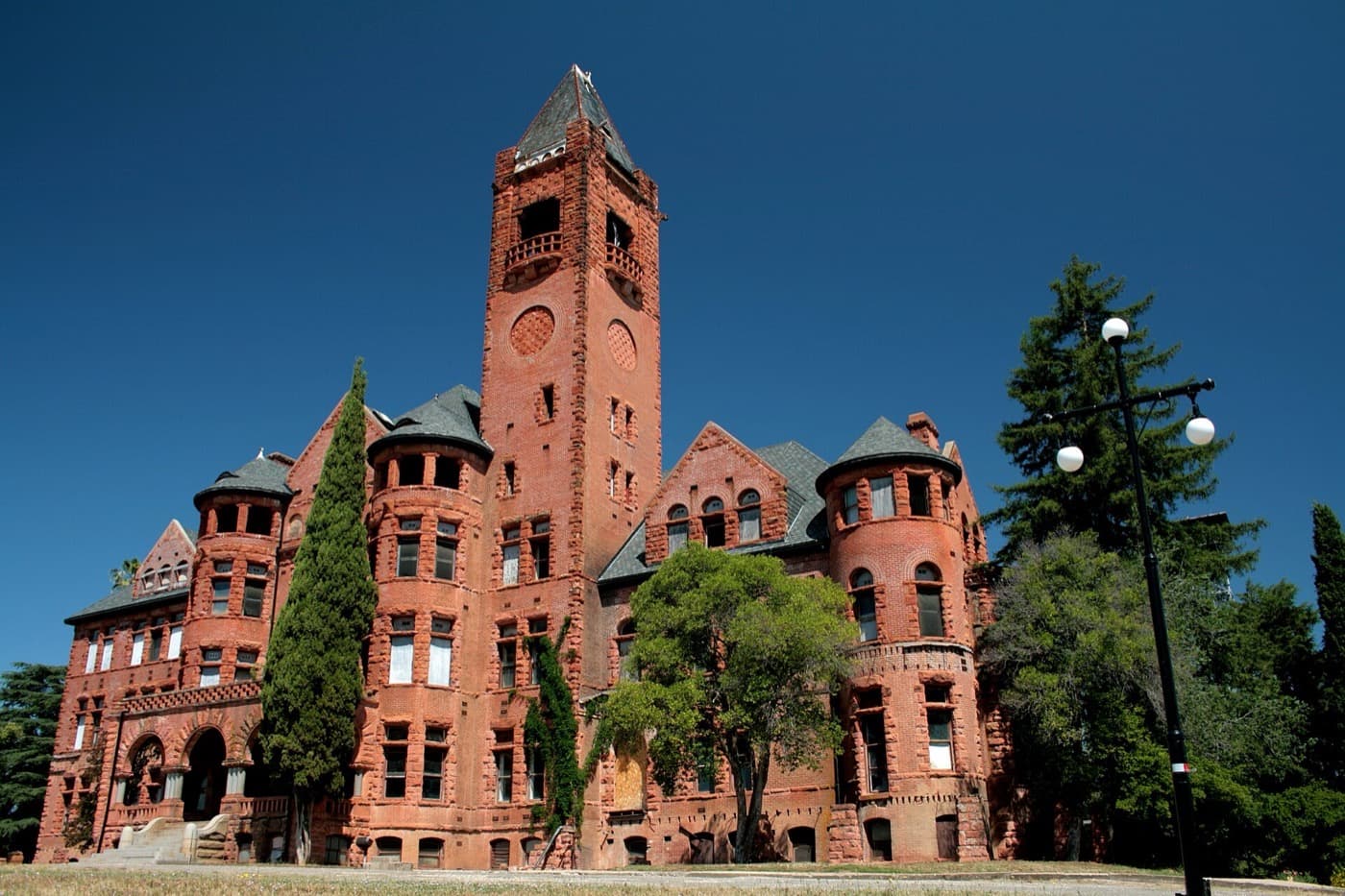
Photo: There is always more mystery · CC BY-SA 2.0 · Wikimedia Commons Preston Castle
The 1894 Romanesque reform-school castle above Ione, run by a foundation that offers historic and self-guided tours by day and flashlight and paranormal tours by night.
Seasonal — public tours run spring to late summer, on set Saturdays. Night tours have age minimums.
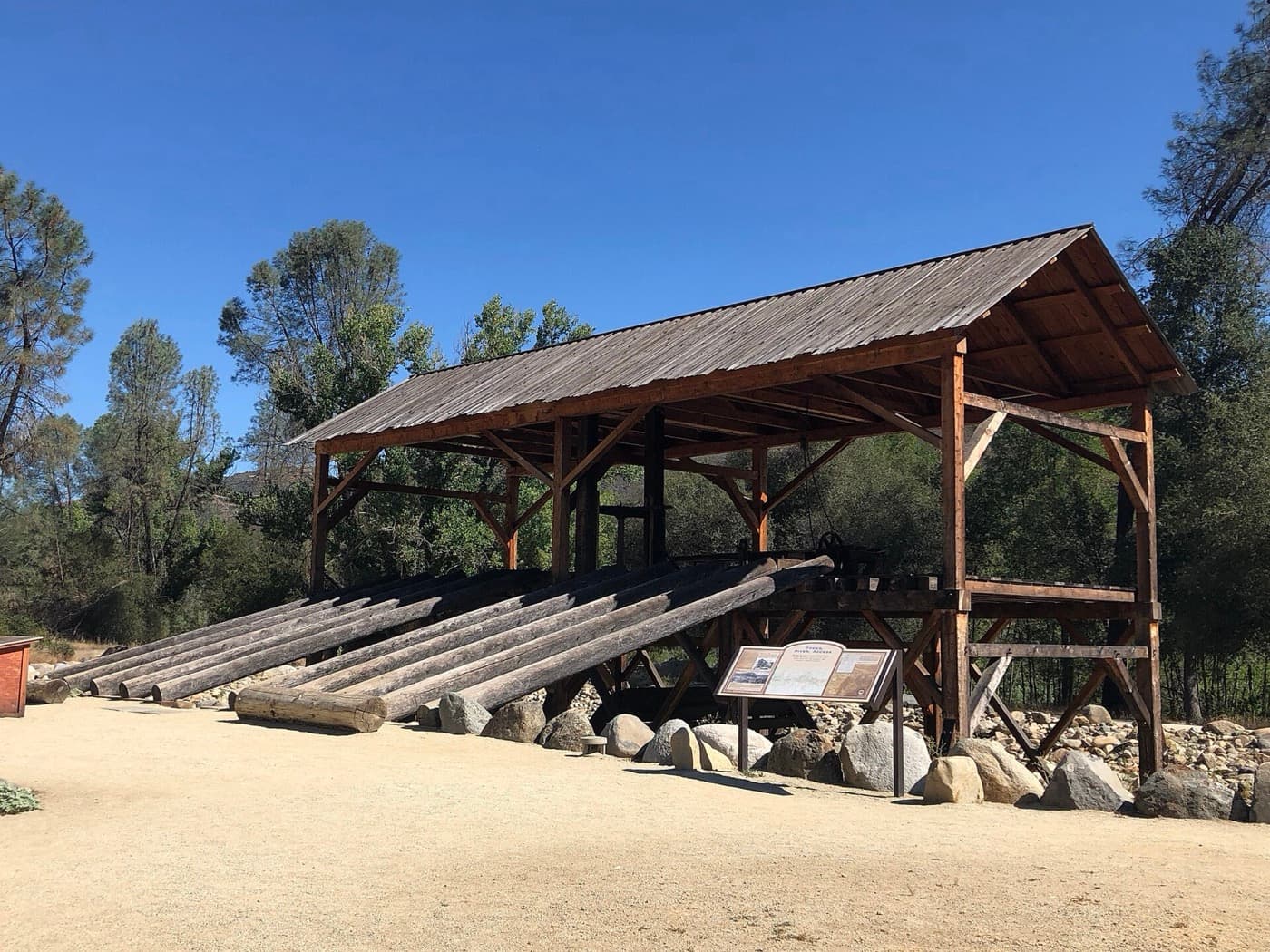
Photo: Missvain · CC BY 4.0 · Wikimedia Commons Marshall Gold Discovery State Historic Park
Where James Marshall found gold at Sutter's Mill in 1848: a museum, a working replica of the mill, historic buildings, and gold-panning lessons on the South Fork of the American River.
Day-use fee per vehicle. Panning lessons run first-come through the day and are canceled above 100°F.
Parks, trails & caverns
The gorge upstream for a scramble or a climb, a crystal cavern, the ancient grinding rock, and — an hour downstream — the wetlands where the cranes winter.
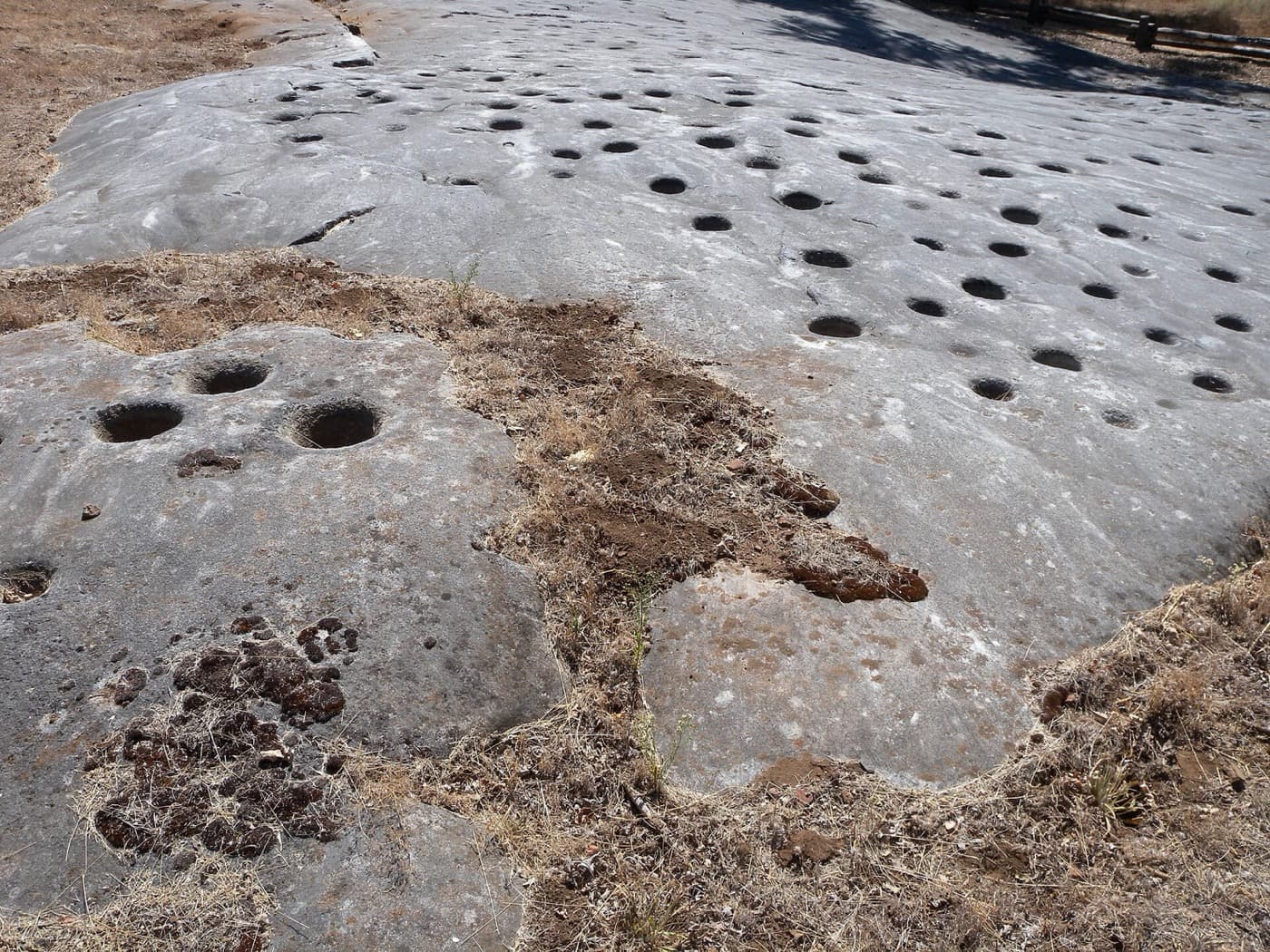
Photo: David Abercrombie · CC BY-SA 2.0 · Wikimedia Commons Indian Grinding Rock State Historic Park
Chaw'se: the largest collection of bedrock mortars in North America, a Miwok ceremonial roundhouse and bark houses, and the regional Indian museum, in a meadow of valley oaks.
Park open sunrise to sunset; museum 10am–4pm. The Big Time gathering is usually late September.
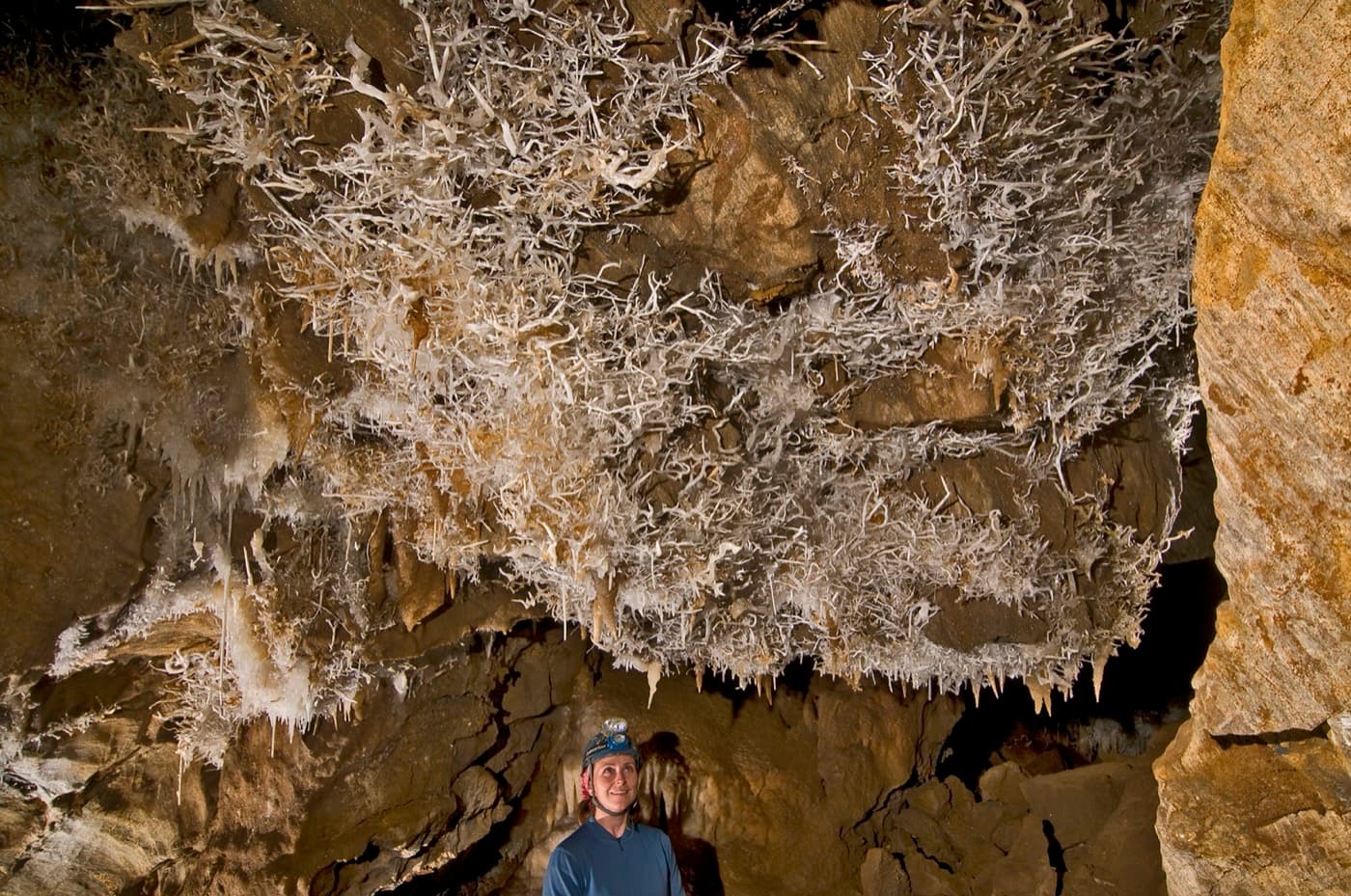
Photo: Dave Bunnell / Under Earth Images · CC BY-SA 4.0 · Wikimedia Commons Black Chasm Cavern
A fifty-minute guided walk through a show cave famous for its helictites — twisting crystals that earned it National Natural Landmark status. Cool underground on a hot day.
Tours on the hour; stairs throughout, so not for strollers. Hours change seasonally — check before driving up.
Photo: Cosumnes River Ranch Cosumnes River Gorge — hiking & rock climbing
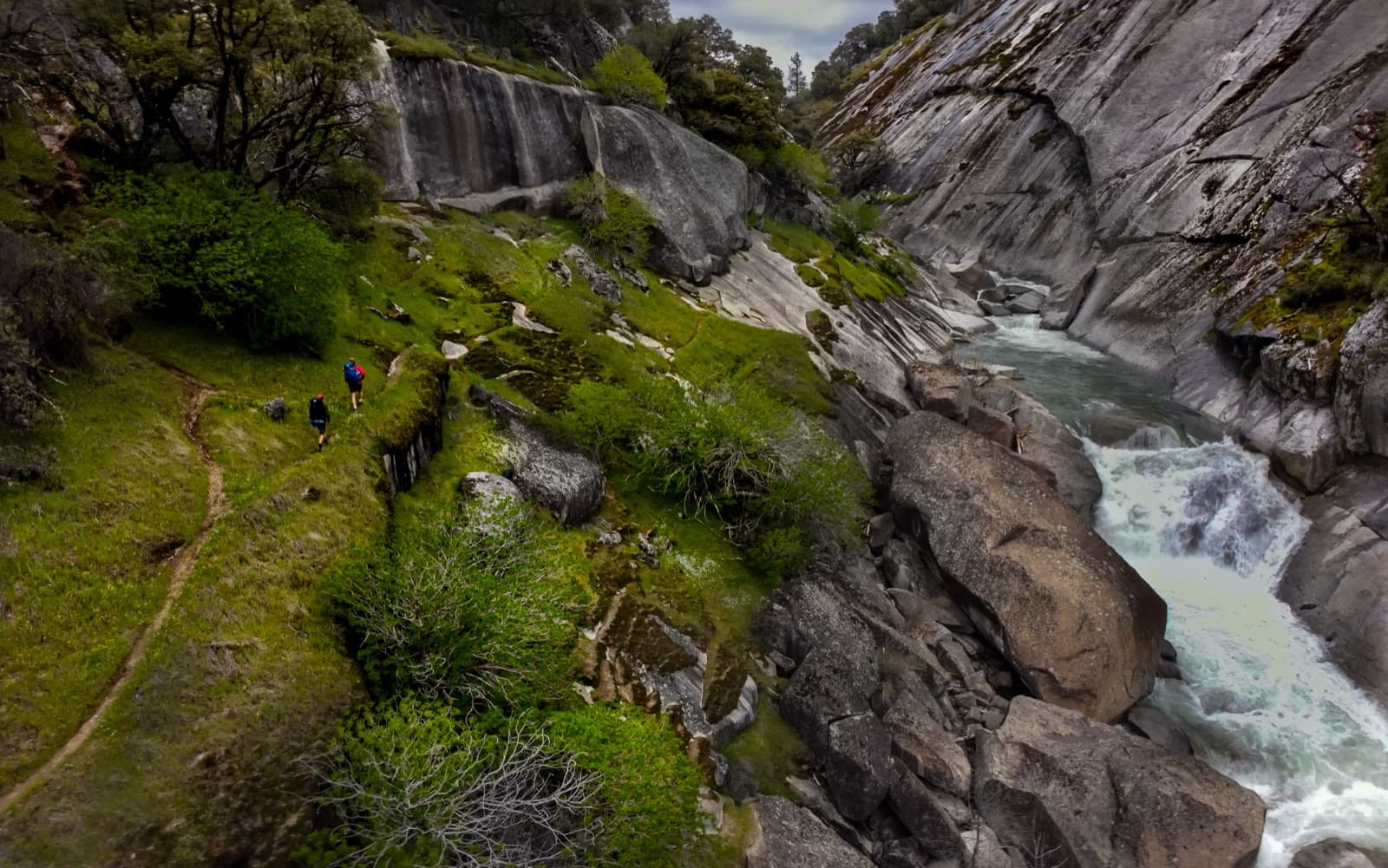
The same river, upstream: a granite-walled gorge on the North Fork Cosumnes, public land since the American River Conservancy bought it and handed it to the BLM. A short, steep trail drops from Bucks Bar Road to polished slabs, deep pools and Bucks Bar Dome, with several hundred climbing routes for every grade.
Free, no facilities. The trail starts at the guardrail on Bucks Bar Road and is rough — rock scrambling, slick when wet. The river runs high and dangerous in winter and spring, and the canyon bakes in summer. Go early.
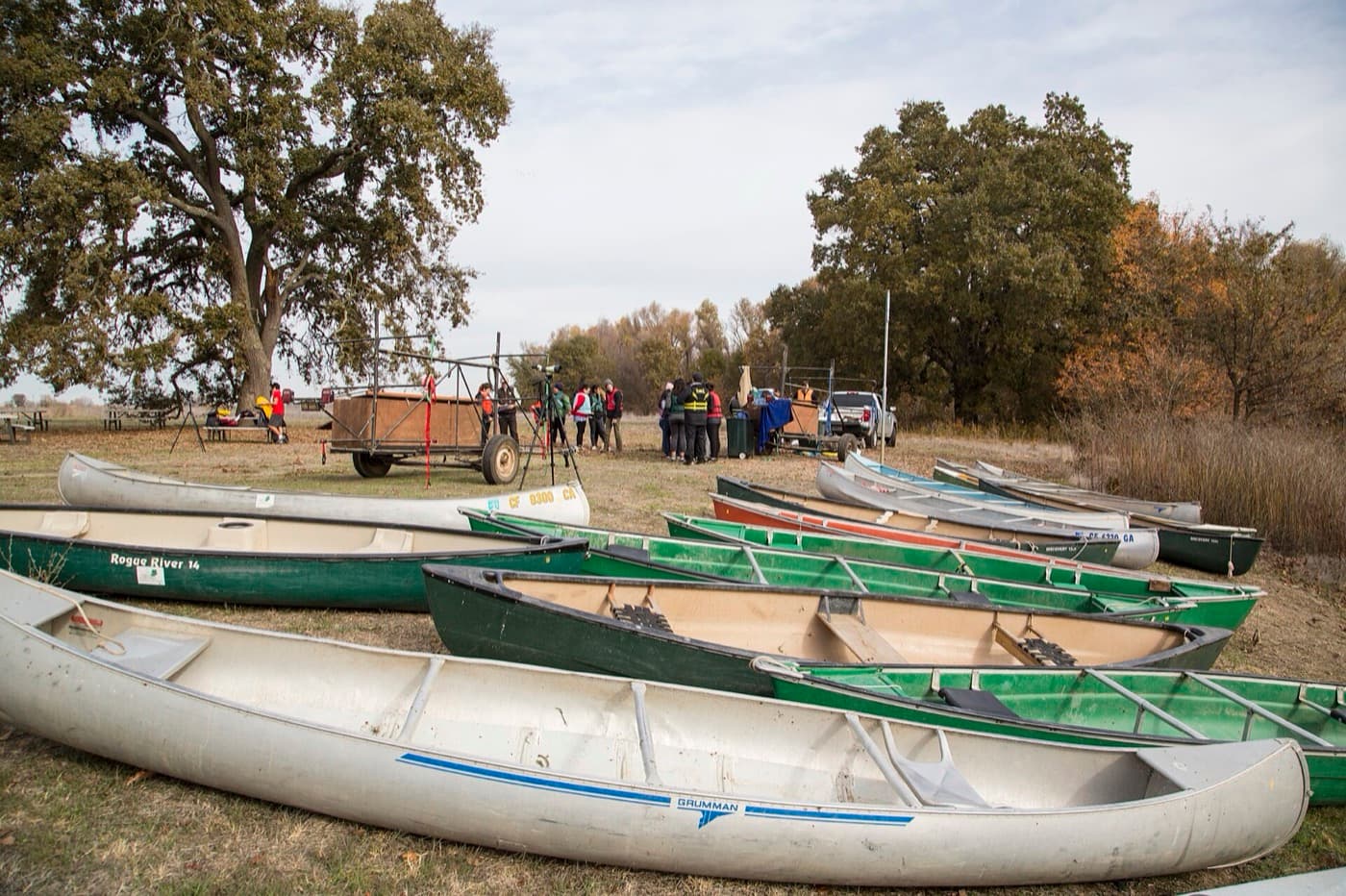
Photo: blmcalifornia · Public domain · Wikimedia Commons Cosumnes River Preserve
The same river, an hour downstream: a valley-oak riparian preserve with boardwalks over the wetlands. From late September the sandhill cranes arrive, peaking in December — one of the great sights of the Central Valley.
Gates and visitor center keep daytime hours; no pets. A half-day trip, best in the cooler months.
On the water
Guided whitewater on the neighboring rivers — half-day family runs to full-day trips — in the dam-release season.
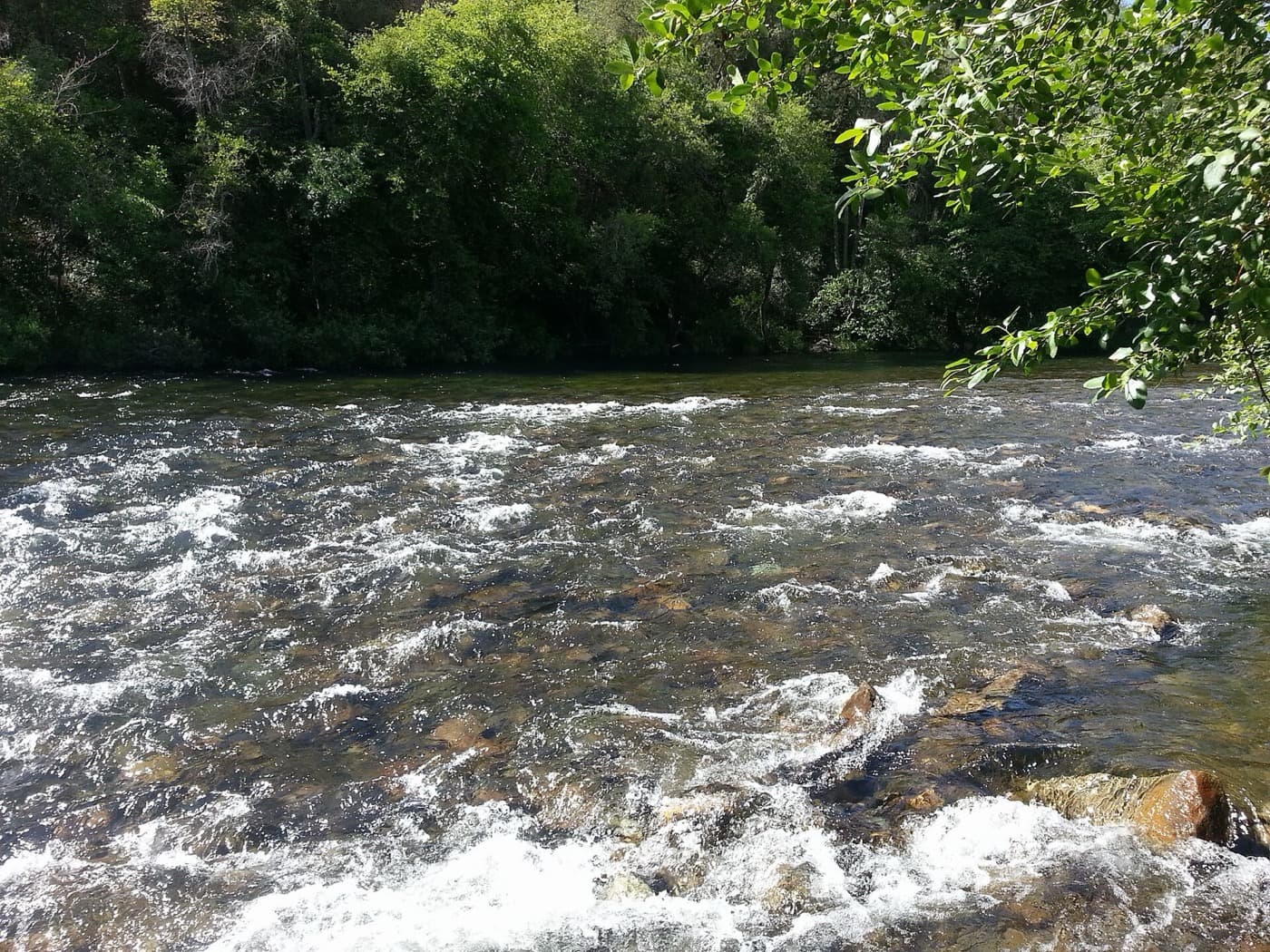
Photo: WilliamThweatt · CC BY-SA 4.0 · Wikimedia Commons Mokelumne River — the Electra Run
A six-mile Class II–III beginner and family run on a Wild & Scenic river minutes from Jackson, offered as half-day guided trips by licensed outfitters; children from about age four.
Runs roughly May to mid-September on dam releases. Book ahead on summer weekends.
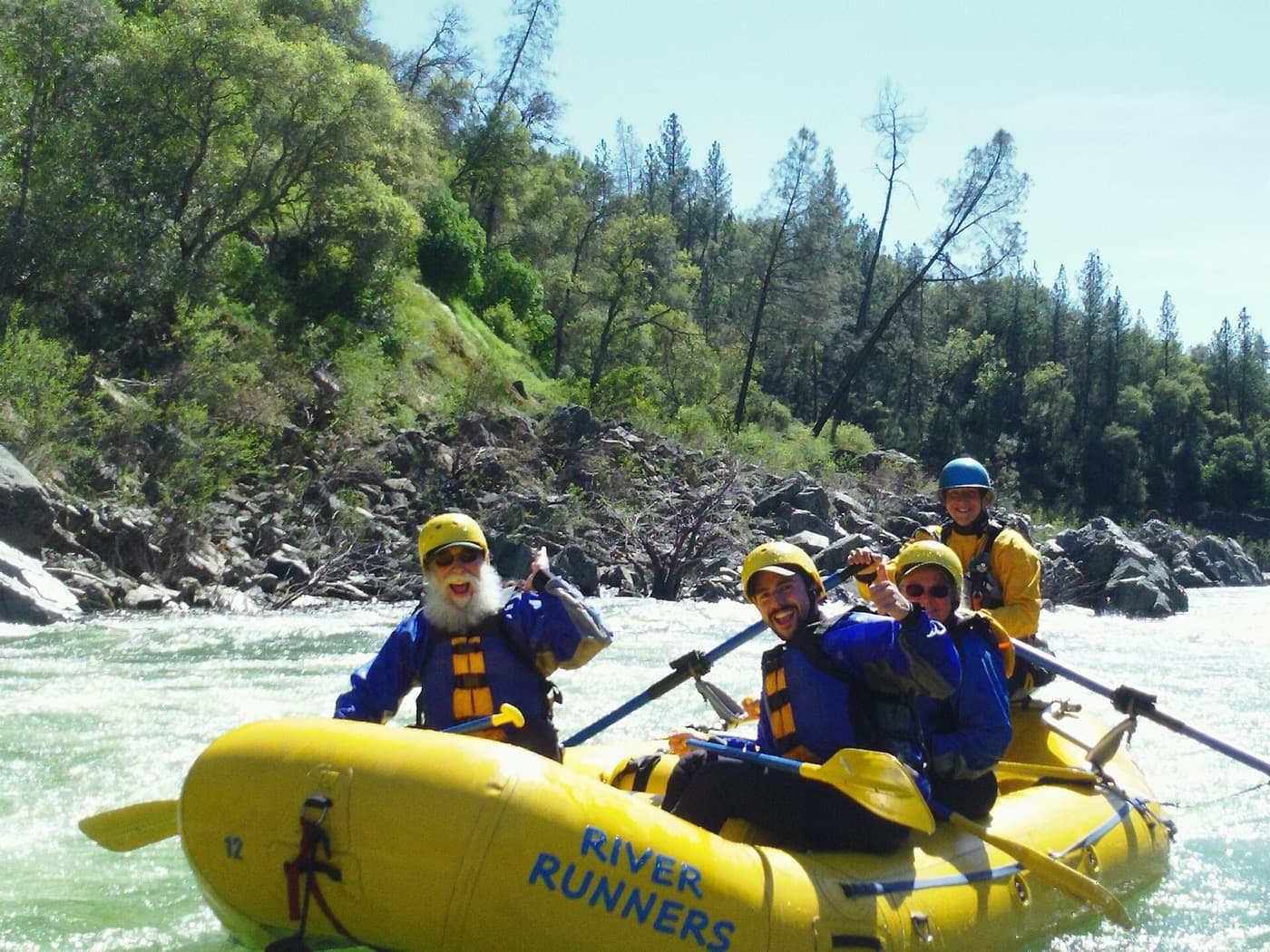
Photo: Saraivee · CC BY-SA 4.0 · Wikimedia Commons South Fork American River rafting with River Runners
One of the most-rafted rivers in North America, Class II–III+. The ranch sends its guests to River Runners in Coloma — a locally run, locally staffed outfitter with half-day, full-day and two-day trips on the family-friendly South Fork.
Roughly April to October; spring snowmelt means higher, colder water. Book ahead for summer weekends. The ranch's pick.
Eat & drink
Where to get a real meal before you head back up the canyon.
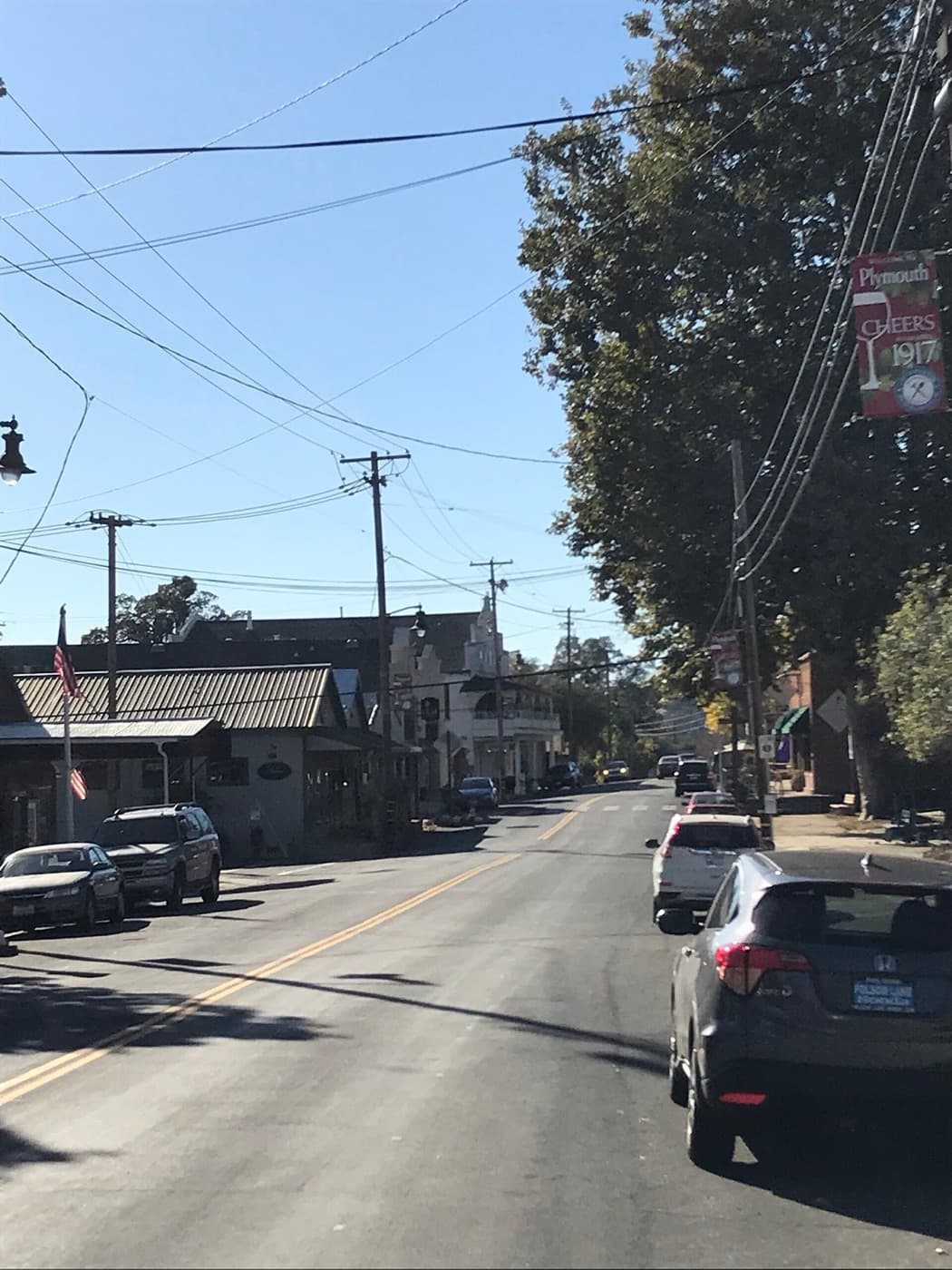
Photo: Fruitianslip · CC BY-SA 4.0 · Wikimedia Commons Taste Restaurant & Wine Bar
Plymouth's destination table: a seasonal, locally sourced menu and a deep Amador wine list, a short walk from the fairgrounds end of Main Street.
Dinner most nights, lunch Friday–Sunday, closed Tuesday. Reserve ahead.
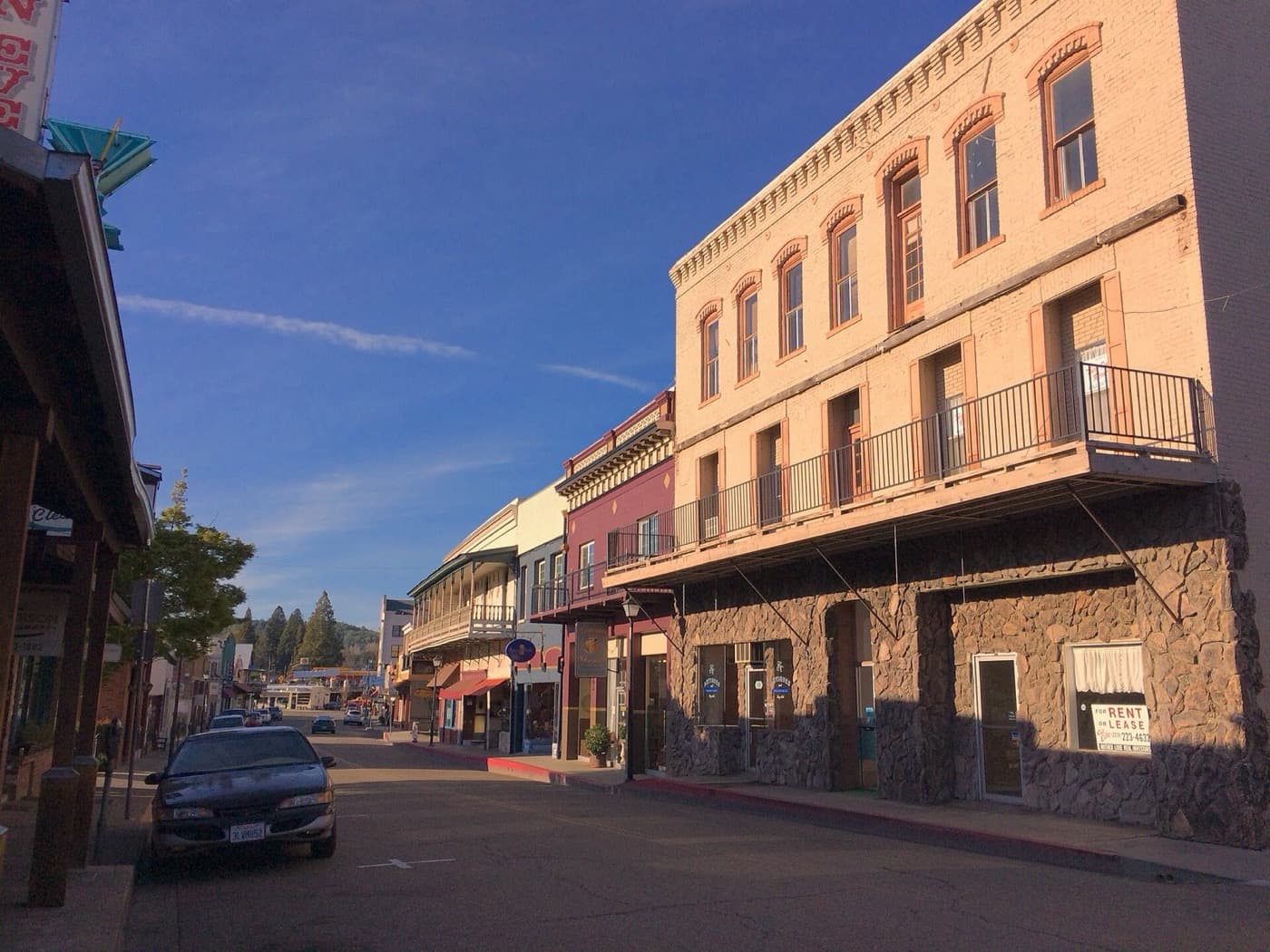
Photo: Sharon Hahn Darlin · CC BY 2.0 · Wikimedia Commons Teresa's Place
Family-run Italian on Jackson Gate Road since 1921, begun as a miners' boarding house — old-school red-sauce dinners in a dining room that has not needed to change.
Closed Wednesday and Thursday; dinner the other nights, lunch on Friday.
Seasonal & events
The Amador County Fair in late July or early August, Sutter Creek's ragtime festival each August, and community theater in Volcano's fifty-seat Cobblestone Theatre.
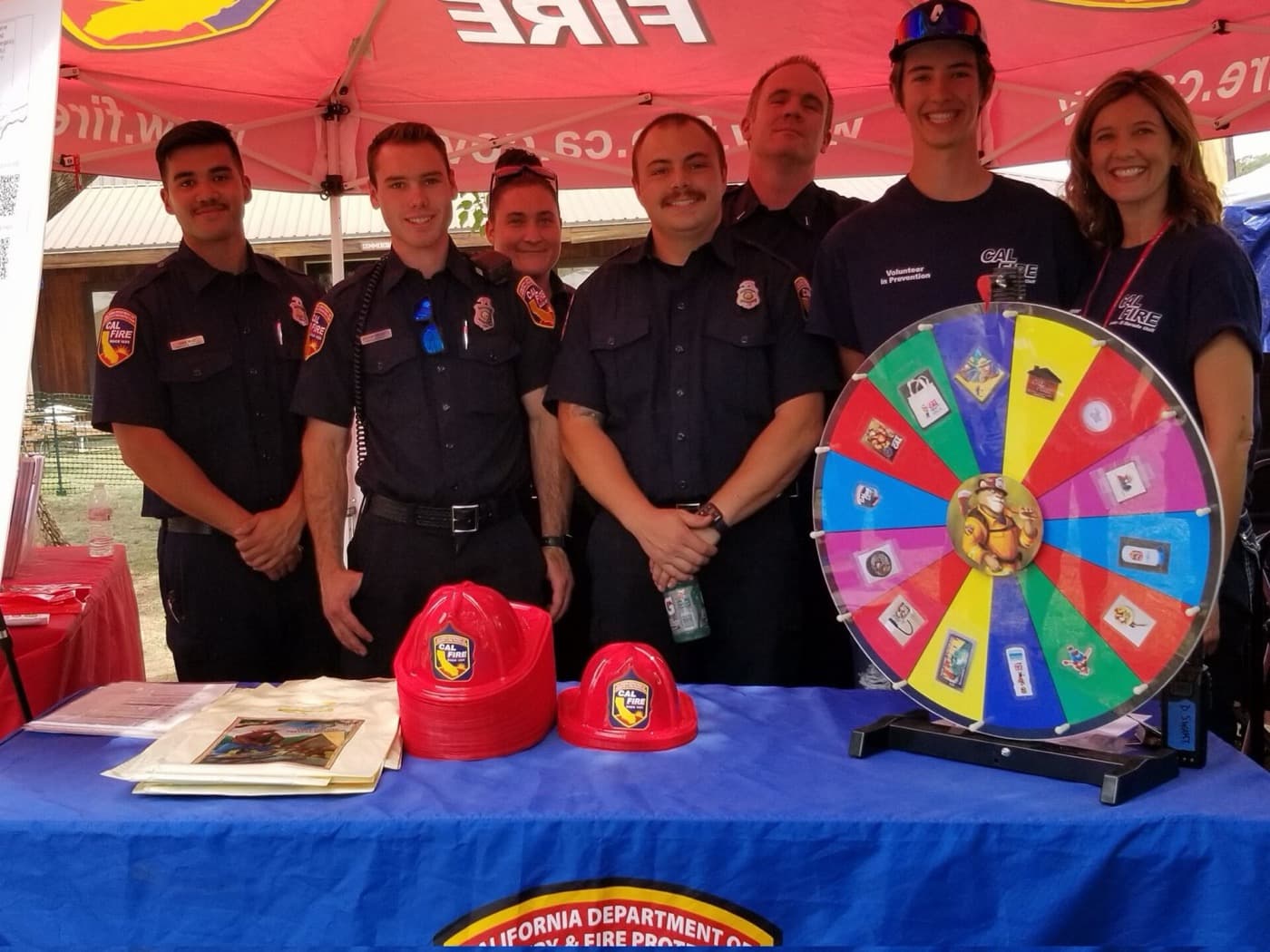
Photo: CAL FIRE AEU · Public domain · Wikimedia Commons Amador County Fair
Four days at the fairgrounds on the edge of town every late July or early August: livestock shows, the carnival, arena events, local food and music.
Tickets usually go on sale in May. It is the busiest weekend of the year in Plymouth — plan the drive.
Sutter Creek Ragtime Festival
Three days of ragtime piano in seven venues along Main Street each August, with silent films accompanied live and a youth showcase.
Mid-August; dates for the following year are posted on the festival site.
Volcano Theatre Company
Community theater since 1974 in the 1856 Cobblestone Theatre — about fifty seats, said to be the smallest fixed-seat theater in California — and, in summer, an outdoor amphitheater where you picnic before the show.
Spring and fall indoors, summer outdoors. Some productions carry an age advisory.
Plan by who you are
If you are camping
Mornings are for the towns and the tasting rooms; afternoons belong to the river. Sutter Creek and the Shenandoah Valley are close enough that you are back at your site with the light still on the water.
Sites, cabins and availability →If you are here for a wedding
Send the wedding party to the valley the afternoon before: a tasting-room loop is twenty minutes from the barn, and Sutter Creek's main street is where brunch happens the morning after.
The Stone Barn →If you are on a shoot
Plymouth and Sutter Creek cover crew meals and coffee runs; Jackson has the hardware store and the pharmacy. Sacramento is about an hour west on Highway 16 for anything bigger.
Film & TV locations →Questions guests ask
How far is the ranch from Sacramento?
Plymouth is about 41 miles east of Sacramento on Highway 16 — roughly an hour's drive. Sacramento International Airport is about 51 miles, usually an hour to an hour and a quarter.
Is there cell service?
The town of Plymouth has strong coverage on the major carriers, but the foothill canyons drop signal in places. Download offline maps and your booking details before you leave the highway.
What is the weather like?
Summer days are hot — July highs average in the mid-90s — with cool nights. December highs sit in the low 50s with lows near 40. Bring layers in every season and water in summer.
Where is the nearest hospital?
Sutter Amador Hospital in Jackson has a 24-hour emergency department, about 19 minutes from Plymouth. For anything urgent, call 911.
Where is the nearest full grocery store?
The Safeway on Industry Boulevard in Jackson, about 19 minutes away. Plymouth has small markets for basics.
Can we go rafting?
The guided public runs are on the neighboring rivers: the Mokelumne's Electra Run near Jackson, roughly May to mid-September and suitable from about age four, and the South Fork American at Coloma, about April to October — the ranch recommends River Runners there.
How close is wine tasting?
The Shenandoah Valley begins about two miles from Plymouth with more than fifty wineries; La Mesa Vineyards, where the ranch's own grapes grow, is about nine minutes up Shenandoah Road. Tasting fees are typically modest. Arrange a designated driver — the roads are narrow and the pours are generous.
What is on in August?
The Amador County Fair in Plymouth in late July or early August, then the Sutter Creek Ragtime Festival in mid-August. Both draw crowds — book restaurants ahead on those weekends.
Hours and seasons change — check the venue before you go. Know a spot that belongs here? Tell us at the gate.